Deeper prenatal genetic insight from 10 weeks of pregnancy. Advanced screening for chromosomal conditions, microdeletions and inherited recessive disorders.
NIPT All Chromosomes5 Microdeletions18 Common Recessive Genetic Diseases
PRENIX through uniCare Home Health, with laboratory testing by Biosytech Medical Laboratory.
AED1,999SPECIAL PRICE
From
10 weeks
Screening recommended from the first trimester.
Why PRENIX
Designed for Deeper Insight
A wider look at Prenatal Genetics. Many serious genetic conditions can be silently inherited by the fetus, even in the absence of any family history, and may occur in otherwise healthy couples.
PRENIX helps access comprehensive prenatal genetic screening. Designed to screen for:
01
Trisomy 13, 18 & 21
02
05 Clinically Significant Microdeletions
03
Sex Chromosome Aneuploidies
04
18 Common Recessive Genetic Diseases
05
All Other Chromosomes
Reflex Testing
Includes reflex paternal confirmation testing if any of the recessive conditions are positive in the baby's report.
Screening Coverage
What Does PRENIX Screen?
PRENIX uses cell-free DNA analysis to screen for the conditions most relevant to early genetic risk assessment.
1
Chromosome screening
Chromosomal Aneuploidies
5 groups
Trisomy 21
Down syndrome
T21
Trisomy 18
Edwards syndrome
T18
Trisomy 13
Patau syndrome
T13
Sex Chromosome Aneuploidies
SCA panel
SCA
Other Chromosomes
Rare autosomal trisomies
RAT
2
Targeted screening
Microdeletion Syndromes
5 syndromes
DiGeorge Syndrome
22q11.2 deletion
22q
1p36 Deletion
1p36 syndrome
1p36
Angelman / Prader-Willi
15q11.2 deletion
15q
Cri-du-Chat
5p deletion
5p-
Wolf-Hirschhorn
4p16.3 deletion
4p-
3
Inherited conditions
Recessive Genetic Conditions
17 genes · 18 conditions
HBA1 / HBA2Alpha Thalassemia
HBBBeta Thalassemia / Sickle Cell
SLC25A13Citrin Deficiency
ATP7BWilson's Disease
GAAPompe Disease (GSD Type II)
PAHPhenylketonuria (PKU)
GALTGalactosemia
G6PDG6PD Deficiency
SLC26A4Pendred Syndrome
SLC22A5Primary Carnitine Deficiency
CFTRCystic Fibrosis
F8Hemophilia A
OTCOTC Deficiency
ABCD1Adrenoleukodystrophy (ALD)
CAPN3Limb-Girdle Muscular Dystrophy
MYO15ANonsyndromic Hearing Loss
GJB2Connexin 26 Deafness
Test Performance
Screening Sensitivity
Sensitivity figures reported in the PRENIX brochure, derived from extensive clinical validation in non-invasive prenatal screening populations.
Trisomy
0.0%
T21 · Down syndrome
Trisomy
0.0%
T18 · Edwards syndrome
Trisomy
0.0%
T13 · Patau syndrome
Aneuploidies
0.00%
Sex Chromosome
Sensitivity figures given in the PRENIX brochure. PRENIX is a screening test; positive results require appropriate confirmatory testing as directed by a physician.
Test Details
PRENIX at a Glance
The essentials you need before booking: when, what code, how long, and what samples are taken.
Recommended From
10 weeks of pregnancy
First trimester screening.
Test Code
GEN1140
Use this code when ordering PRENIX.
Turnaround Time
8–18 days
NIPT — 8–10 Days Final Report — 18 Days
Specimen Type
Maternal & Paternal
10 ml (cfDNA) in Streck Tube from mother 5 ml (EDTA Blood) from father
Technology
Where Genomics Meets Intelligent Analysis
PRENIX combines high-throughput next-generation sequencing with proprietary machine-learning, designed to extract maximum information from a single maternal blood draw.
Cell-Free DNA Analysis
Maternal DNA Extraction
Next-Generation Sequencing
PRENIX NIPT-R Algorithm
Structured Result Interpretation
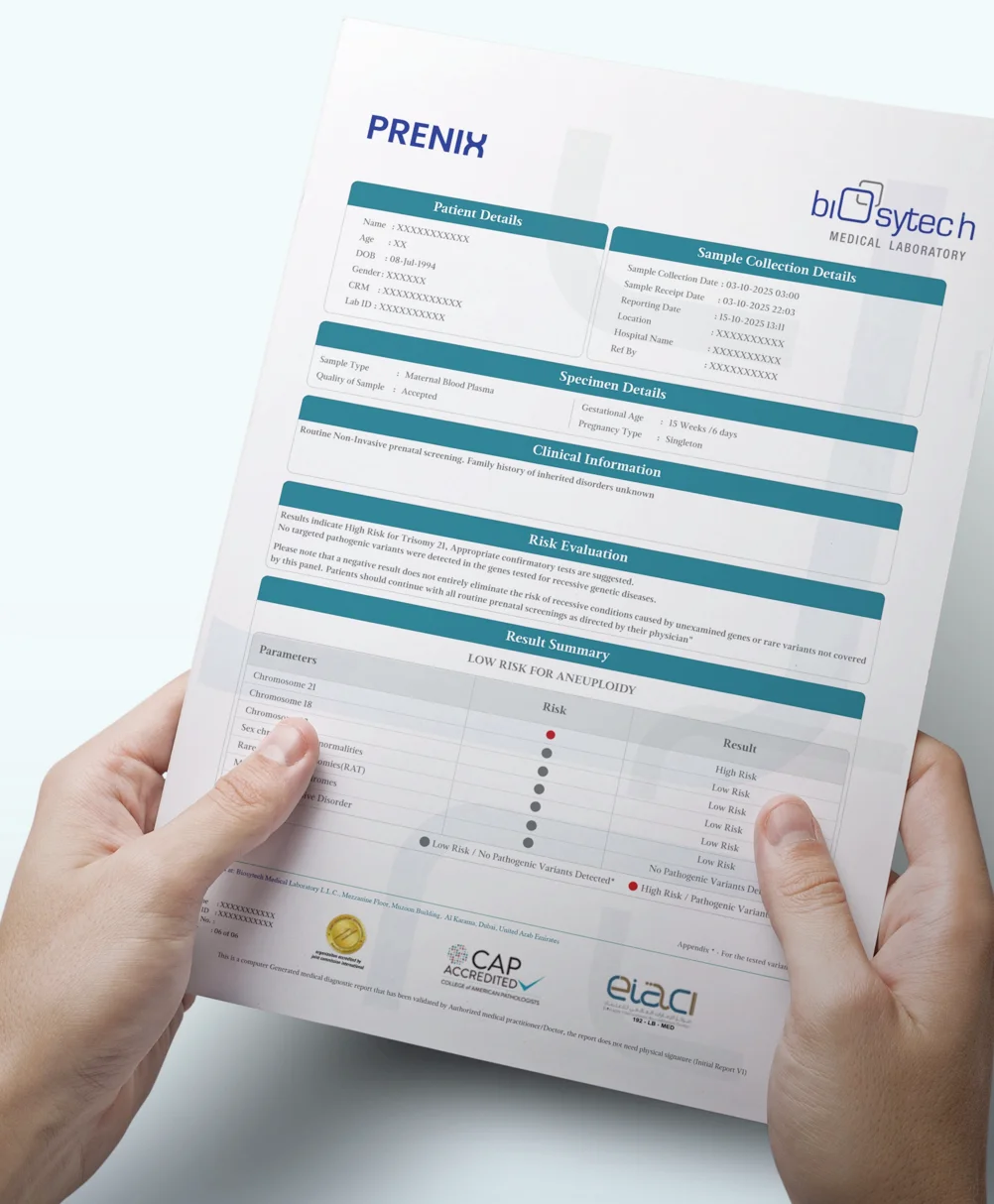
Your PRENIX Report
Clear Results. Structured Reporting.
Results are interpreted and presented in a structured PRENIX report — a single document supporting clinical decision-making between physician and patient.
Patient Details
Name, age, gestational age and pregnancy type.
Sample Information
Collection, receipt and reporting dates.
Clinical Information
Provided physician context for the analysis.
Risk Evaluation
Per-condition risk markers and clinical note.
Result Summary
Tabular listing across chromosomes, RAT and recessive conditions.
Variant Appendix
Detailed listing of tested variants referenced in the report.
PRENIX is delivered by Biosytech Medical Laboratory — a UAE-accredited clinical genetics laboratory operating from Dubai and Sharjah.
Laboratory Expertise
Specialised clinical genetics laboratory led by Biosytech Medical Laboratory.
Advanced Genetic Testing
Advanced prenatal genetic screening using next-generation sequencing and proprietary machine-learning algorithms.
Structured Reporting
Structured, validated report designed for physician interpretation and clinical follow-up.
Dubai & Sharjah
Two UAE locations for sample collection and physician support.
Enquire
Interested in PRENIX?
Speak with the uniCare team to learn more about PRENIX prenatal genetic screening and how to book your test.
FAQ
Common Questions About PRENIX
The following answers summarise information from the PRENIX brochure. For clinical guidance please consult your physician.
PRENIX is an advanced prenatal genetic screening test by Biosytech Medical Laboratory. It analyses cell-free DNA from the mother's blood to provide deeper insight into chromosomal and inherited genetic conditions from as early as 10 weeks of pregnancy.
PRENIX is recommended from 10 weeks of pregnancy — during the first trimester.
PRENIX screens for Trisomy 13, 18 and 21; sex chromosome aneuploidies; all other chromosomes; five clinically significant microdeletions (DiGeorge, 1p36, Angelman/Prader-Willi, Cri-du-Chat and Wolf-Hirschhorn); and 18 common recessive genetic conditions across 17 genes.
Reflex testing is a feature of PRENIX that automatically includes paternal confirmation testing if any of the recessive conditions is positive in the baby's report — using the 5 ml paternal EDTA sample.
A 10 ml maternal blood sample collected in a cfDNA Streck tube, along with a 5 ml EDTA blood sample from the father when paternal testing is required. For added convenience, PRENIX sample collection can also be arranged at home through uniCare, subject to service availability.
NIPT results in 8–10 days; the final PRENIX report is delivered within 18 days.
Yes. PRENIX includes NIPT for all chromosomes plus 5 microdeletions, sex chromosome aneuploidies and 18 recessive genetic conditions.
Yes — five clinically significant microdeletions are screened: DiGeorge Syndrome, 1p36 Deletion, Angelman/Prader-Willi, Cri-du-Chat and Wolf-Hirschhorn.
If a relevant recessive finding is identified through the maternal screening, reflex paternal testing may be recommended to provide additional genetic information and support further clinical interpretation.
Pregnancy & Prenatal Testing
Looking for Clear
Prenatal Testing
Guidance?
Get trusted support for prenatal genetic screening. Our uniCare team can help you
understand PRENIX, choose the right next step, and arrange your test with confidence.